Logo

Faculty

Institutional Identity

The Faculty of Computer and Information Technologies of Istanbul University was established by the decision published in the Official Gazette dated 02/06/2021, No. 31499. Along with the establishment of the Faculty, the departments of Computer Engineering, Electronics and Telecommunications Engineering, Software Engineering, Artificial Intelligence and Data Engineering, and Cybersecurity Engineering were approved.

Unlike traditional engineering faculties, our Faculty has a flexible and forward-looking structure that prioritizes rapidly evolving information technologies, with the goal of becoming a leading institution in computing technologies worldwide. To this end, within Istanbul University, Türkiye’s first university, the Faculty aims to foster interdisciplinary studies, develop solutions to sector-specific computing challenges, educate highly qualified IT professionals who stay ahead of the times and the industry, and bring academia and the computing sector together through the scientific method.

In line with these goals, the Department of Computer Engineering admitted its first cohort of students in the 2023–2024 academic year.

In the following 2024–2025 academic year, the Department of Artificial Intelligence and Data Engineering also welcomed its first cohort.

In addition, the thesis-based Master’s Program in Computer Engineering, which began admitting students in the 2024–2025 academic year, continues its educational activities with the objective of training competent engineers and researchers at the graduate level.

In the 2025–2026 academic year, the Faculty further expanded its graduate education opportunities by launching the PhD Program in Computer Engineering.

Mission

  1. 1.

    To design and sustain undergraduate and graduate programs within the Faculty that are among the first choices of students in Türkiye and worldwide. To establish and sustain computer science undergraduate programs, particularly in information technologies, engineering and related disciplines, that attract the highest entrance scores and greatest demand in Türkiye.

  2. 2.

    With academic staff and an advisory board that guide the industry, to help shape national and international decisions and standards in the information technology sector, anticipate its needs and offer forward-looking solutions.

  3. 3.

    To guide society by monitoring social problems, needs and developments, particularly those arising or likely to arise in information technologies, and to provide the necessary information and guidance before problems occur, in step with emerging needs and developments.

  4. 4.

    In line with our role in providing expert knowledge and opinions, to act proactively, without waiting to be asked, by collaborating and strengthening communication with relevant institutions, government bodies and non-governmental organizations, and to provide strategic support for decisions affecting the entire information technology sector, especially at the national level.

  5. 5.

    To reach a leading position in academic activities in Türkiye, work actively with the information technology sector and all sectors that use information technologies on the quality of academic publications, patents, utility models and all forms of R&D projects, and guide scientific progress.

Vision

Our Faculty aims to lead philosophical and scientific transformation in information technologies in Türkiye and worldwide. Its priorities are to host long-term scientific research, accelerate the practical application of science and the scientific transformation of institutions, train qualified professionals to meet growing demand and a rapidly widening skills shortage, and lead industrial projects that shape the sector.

Our Core Values

  • Technological Innovation
  • Scientific Excellence
  • Collaboration and Partnership
  • Transparency and Accountability
  • Social Responsibility
  • Ethical and Professional Conduct
  • Continuous Learning and Development
  • Sustainability and Environmental Respect
Prof. Dr. Kutluk Kağan SÜMER

Welcome to the Faculty of Computer and Information Technologies at Istanbul University, one of the strongest pillars of the bridge of knowledge and wisdom that stretches from the past into the future.

Istanbul University is not merely an institution of higher education; it embodies a deeply rooted civilizational memory that brings together the legacy of the centuries-old Turkish-Islamic scientific tradition, shaped by wisdom, and the scientific methods required by our age. The most valuable message conveyed by this memory is that science is humanity’s shared reason. It is universal, recognizes no boundaries and does not divide people according to their differences; on the contrary, it is the greatest common language that unites humanity around the same truth. With this understanding, and a perspective that turns the accumulated knowledge of the past into the foundations of the future, we say, “Let us write the future together.”

Today, information technologies are not merely an aspect of technological progress; they constitute a strategic sphere of power that, through research, development and production, shapes the prosperity of nations, the transformation of institutions, the security of societies and even the capacity of states to endure. Our Faculty’s vision is to be one of the pioneers of the philosophical and scientific transformation in computing in Türkiye and around the world, to support long-term scientific work, and to ensure that knowledge is not only produced but also put into practice by making it more applicable. We view science not only as a theoretical framework, but also as a foundation for productive work that addresses humanity’s needs, increases social benefit, and creates value for industry and the public sector.

Within this framework, we shape our educational and research activities through our departments of Computer Engineering, Artificial Intelligence and Data Engineering, Software Engineering, Electronics and Telecommunications Engineering, and Cybersecurity Engineering. Computer engineering builds the essential infrastructure of the digital age; artificial intelligence and data engineering make it possible to interpret information, generate predictions, and base decision-making on scientific foundations. Software engineering is one of the most critical disciplines of production, turning ideas into products by implementing complex systems in reliable, sustainable and scalable ways. Electronics and telecommunications engineering forms the invisible backbone of the digital world and is a key to technological independence across a wide range of fields, from sensors to satellites and from embedded systems to next-generation networks.

Cybersecurity is no longer merely a technical specialty; it has become one of the most important matters of survival in this new era. Today, every critical system, from energy lines to healthcare, from transportation to financial infrastructure, and from public services to defense technologies, has been digitalized; security has been redefined in the digital realm, beyond physical borders. Cybersecurity is therefore a strategic necessity that extends beyond protecting institutions and directly affects national security, social well-being and the stability of the world’s shared digital ecosystem. Recognizing this reality, our Faculty aims to address information security with scientific depth and engineering discipline, educate qualified professionals who can meet national and global needs, and conduct pioneering research in this field.

As a Faculty carrying Istanbul University’s historical heritage and academic responsibility, we place scientific standards, ethical conduct, work discipline and international standards at the center of our work, in keeping with our identity as a research university. Keeping our academic staff up to date and dynamic, strengthening research opportunities, developing international collaborations, and carrying out projects integrated with industry are only part of our goals. Our principal aim is to bring quality to the production of knowledge, turn high-quality work into social benefit, and establish a scientific ecosystem that has a voice in the technologies shaping the future.

Our Faculty is not merely a place where classes are taught; it is an environment for thought and production in which curiosity becomes discipline, ideas develop into research, and research becomes products and value. We believe that everyone educated here will contribute to society as an innovative and responsible engineer who understands the universality of scientific reason, has embraced the scholarly heritage of their own culture, and can respond to the needs of the age.

We invite you to join this journey, which brings together the universal horizons of science and Istanbul University’s deep-rooted tradition, and to build the future together.

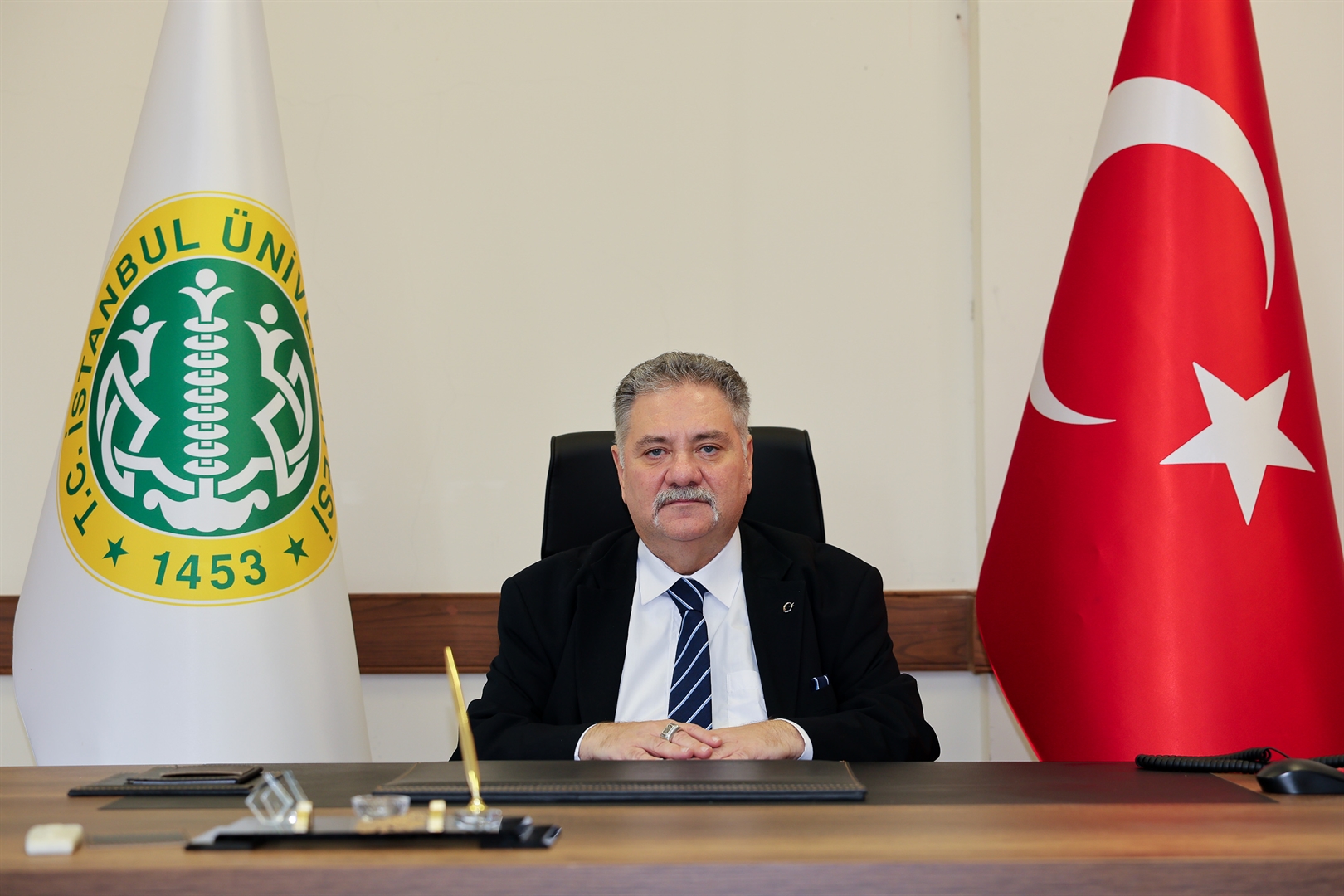
Prof. Dr. Kutluk Kağan SÜMER
Dean

Questions and resources about study, faculty facilities and student procedures.

About the faculty

Select a question to show or hide its answer.

The faculty offers undergraduate programs in Computer Engineering and Artificial Intelligence and Data Engineering. Visit the department pages for program objectives, courses and areas of study.

The undergraduate programs are taught in English. Students who meet the English proficiency requirement can begin their undergraduate courses. Students who do not meet it attend the preparatory program.

For proficiency examinations, exemption requirements and dates, consult the School of Foreign Languages.

The faculty address and map are available on the Contact page (in Turkish). Classes may be held in different buildings. Check the classroom list on the Course Schedule page for the location of your class.

BBTF Electronics Circuit Lab and BBTF Computer Lab are on the ground floor of the BBTF Building.

The undergraduate programs are offered as on-campus programs. Follow the current course schedule for class dates, times and delivery details.

For attendance requirements, consult the course information and the applicable academic regulations (in Turkish).

Yes. The faculty has a thesis-based MSc in Computer Engineering and a PhD in Computer Engineering.

Program opening information is available on the History page, and graduate course schedules are on the Course Schedule page. Refer to the graduate admission notices for the relevant term for application dates and requirements.

You can check program accreditation and validity periods in MÜDEK’s list of accredited programs (2026). Check that the university, faculty, program and language of instruction all match.

For information on the accreditation process of our programs, contact bilgisayar@istanbul.edu.tr.

Yes. Students in Computer Engineering and Artificial Intelligence and Data Engineering must complete a compulsory internship of 30 working days to graduate.

Eligibility, the application process, required forms and coordinator information are available on the Internship page.

For study opportunities abroad, see our Erasmus agreements. Seminars, events and faculty activities are available on the Activities and Events pages.

Could not find your answer? bilgisayar@istanbul.edu.tr

2. Istanbul University Institutional Identity Elements

Institutional Identity Guide ↗

Chair

CHAIR

Prof. Dr. Kutluk Kağan SÜMER

Chair of the Faculty External Advisory Board

Members

01

Ahmet Serdar İBRAHİMCİOĞLU

President of KOSGEB

02

Dr. Mustafa AYDIN

Vice Chairman of the Banking Regulation and Supervision Agency (BRSA)

Istanbul University Alumnus
03

Ökkeş Emin BALÇİÇEK

Architecht (Kuveyt Türk)

04

Kamil ERMAN

Engineering Manager at Garanti BBVA Technology

05

Bülent KIRVAL

Turkish Technology

Select a period to expand or collapse its report summary.

During the March 2026 – May 2026 period, our Faculty carried out significant activities across administrative, academic, and scientific domains. International academic engagement and collaboration opportunities were strengthened through the visits of representatives from the Kazakhstan education system and Dr. Dariusz Janiszewski from Poznan University of Technology, Poland. In addition, the academic development of our Faculty was further supported as Dr. Ezgi Zorarpacı received the title of Associate Professor. The articles published by our faculty members in internationally respected journals and the open-access scientific monograph further reinforced the Faculty’s scientific productivity. Moreover, academic and technical interaction was enriched through events such as the KALiTECH’26 Summit, Python 101 Training, Istanbul Informatics Summit 2026, Data 2 Insight, and Startup Arena: Demo Day, bringing our students and academic staff together with current developments in technology, data science, artificial intelligence, and entrepreneurship. Detailed information on all activities carried out during this period can be found in the full report at the link below. 

Open progress reportPDF ↗

During the November 2025 – February 2026 period, our Faculty achieved significant progress across administrative, academic, and scientific domains. The dean handover ceremony carried out during this period strengthened the institutional structure, while international visits and collaboration meetings reinforced the Faculty’s position within the global academic network. Research activities gained further momentum through projects supported by TÜBİTAK and TÜSEB, and the Faculty’s scientific productivity increased with published articles and accepted conference papers. In addition, academic and technical engagement was enriched through training programs and events organized under the “Informatics Talks” series, bringing students and academic staff together with current technological developments. Detailed information on all activities carried out during this period can be found in the full report at the link below. 

Open progress reportPDF ↗

During the July–October 2025 period, our Faculty strengthened its educational and research capacity by opening three laboratories for circuits, artificial intelligence and additive manufacturing. Dr. Sultan Zeybek joined the academic staff, while Founding Dean Prof. Dr. Şadi Evren Şeker completed his tenure. Erasmus+ partnerships expanded with multiple European universities. Our academic output grew through conference papers (including an IEEE Xplore publication), journal articles, and a Springer book chapter. Events such as the “Artificial Intelligence and Qur’an Studies” panel, Postgres Istanbul 2025, “Cybersecurity 101,” LLM Days 1–2, “Future Engineers in the Field,” and the orientation meeting brought the faculty community together and encouraged students to take part. Online promotion days in late July and early August introduced our programs and facilities to prospective students.

Open progress reportPDF ↗

During the March–June 2025 period, our Faculty strengthened its institutional and spatial infrastructure by moving to its new campus and welcomed new academic staff members. Student engagement in national competitions increased, with seven teams applying to TEKNOFEST 2025. The article submission process has begun for the second issue of The International Journal of Data Analytics and Artificial Intelligence Applications (D3AI). In addition, various national and international collaborations, scientific publications, conference presentations, BAP projects, as well as events such as “Informatics Talks” and “Expert Days,” have further enhanced our academic interaction. Detailed information on all administrative, academic, and scientific activities carried out during this period can be found in the full report at the link below.

Open progress reportPDF ↗

The period between November 2024 and February 2025 reflects a phase of steady advancement in the academic and administrative capacity of our faculty. During this time, high-quality research across various disciplines, the publication of scientific articles, and the organization of academic events have clearly demonstrated the faculty’s dedication to the production and dissemination of knowledge. Notably, publications in prestigious journals and the execution of multi-stakeholder projects have extended the scientific impact of the faculty beyond national boundaries.

Strategic approaches adopted by the administration have focused on increasing support for research projects, expanding academic networks, and implementing policies aligned with sustainable development goals. These initiatives have not only reinforced existing achievements but also enhanced the faculty’s visibility and competitiveness on a global scale. By investing in innovative fields and supporting academic staff, the research capacity of the faculty has become even more dynamic.

Key developments during this period include national and international research collaborations, interdisciplinary partnerships, and academic exchange programs. These efforts, in line with the faculty’s vision of internationalization, have provided students and academic staff with richer academic experiences while strengthening the faculty’s reputation and recognition in the scientific community.

The major accomplishments and developments achieved during this period are detailed below. These achievements contribute to the deepening of the faculty’s role in shaping a knowledge-based society and ensure that the impact of its research and educational activities reaches broader audiences. For a more comprehensive overview, please refer to our process report:

Open progress reportPDF ↗

The studies conducted and decisions made during the July 2024 – October 2024 period present a developing profile of the faculty's academic and administrative structure. During this time, comprehensive research conducted across various scientific disciplines, published articles, and organized scientific events formed the foundation of the faculty’s mission to generate and disseminate knowledge. Particularly, research outputs published on national and international platforms provided opportunities to showcase the faculty's scientific contributions and innovative approaches to broader audiences.

Among the strategic decisions made by the faculty administration were supporting research and development projects, establishing long-term collaboration protocols, and taking steps aligned with future goals. These plans not only contribute to academic success but also aim to enhance the faculty's competitive strength on both national and global scales. Supporting academic staff and investing in new research areas have continually enabled the faculty to improve its capacity for knowledge production.

Key developments during this period included collaborative projects, research partnerships, and academic exchange programs at national and international levels. These collaborations, undertaken within the framework of the faculty's internationalization strategy, provide students with a broader perspective and allow academic staff access to global knowledge networks. These efforts aim to increase the faculty’s recognition in the scientific field and offer students an enriched learning environment.

In this context, the significant progress and achievements recorded throughout the period are detailed below. These advancements expand the faculty’s contribution to a knowledge-based society while also broadening the impact of its research and educational activities. For a more detailed examination, you can refer to our progress report: .

Open progress reportPDF ↗

The period from March 2024 to June 2024 reflects the academic and administrative dynamics of our faculty. Academically, the research conducted across various disciplines, published articles, and scientific events highlight the faculty’s mission of knowledge production and dissemination. Among the decisions made, the faculty administration's strategic planning, R&D projects, and collaborative initiatives stand out.

During this period, the decisions taken in line with the faculty’s priorities and vision represent significant steps to support academic success and guide the faculty’s future strategic objectives. Additionally, developments include national and international collaborations, projects, and partnerships. These efforts aim to enhance the faculty's global recognition and provide students with a broader academic perspective.

For a more detailed review, please refer to our progress report:

Open progress reportPDF ↗

The completed works, decisions made, and developments that occurred between November 2023 and February 2024 reflect the academic and administrative dynamics of the faculty. Academically, the research conducted, articles written, and scientific events held in various disciplines emphasize the faculty's mission of knowledge production and sharing. Among the decisions made, the faculty administration's strategic planning, R&D projects, and collaboration initiatives stand out. The decisions taken during this period are significant steps towards supporting academic success and shedding light on the faculty's strategic goals for the future. Additionally, the developments include national and international collaborations, projects, and partnerships. These developments aim to increase the faculty's global recognition and provide students with a broader academic perspective. For a more detailed examination, you can refer to our progress report:

Open progress report (PDF) ↗

To achieve a leading level in academic activities in Turkey and guide scientific progress in terms of academic publication quality, patents, utility models, and all kinds of R&D projects, active efforts have been made with both the IT sector and all sectors operating in the field of information technology. For this purpose, activities aimed at establishing national and international collaborations have been initiated. The Department of Computer Engineering aims to offer the best education to our students in the rapidly developing world of technology. In this direction, efforts are ongoing to expand the academic staff and establish a faculty advisory board. Improvements are being made with determination to ensure our students are better prepared. For a more detailed examination, you can refer to our progress report:

Open progress report (PDF) ↗

For information about our academic journal "JOURNAL OF DATA ANALYTICS AND ARTIFICIAL INTELLIGENCE APPLICATIONS (D3AI)", please view the journal information.

Our journal's website has been launched, and submissions and evaluations will be conducted through the İÜ Press Article Management System, which will be used by all journals in the project. For details, you can visit our journal's website.